5 things about photovoltaic panels you probably didn’t know
Beyond capturing sunlight, a photovoltaic panel is an engineering system designed to operate for decades under real-world conditions of radiation, temperature, wind, dust and electrical stress.
When we think of a solar plant, the first thing that comes to mind is thousands of perfectly aligned panels. However, behind every module are advanced materials, electronics, thermal design, simulation, maintenance and continuous operation aimed at extracting as much energy as possible from a renewable resource: the sun.
In this article, you will discover why not all sunlight is converted into electricity, how heat affects performance, what components make up a module, why bifacial panels have gained prominence, and how operations and maintenance expertise helps a photovoltaic plant maintain its performance, availability and reliability at scale.
- 01. A panel does not use all sunlight: it captures the usable energy
- 02. Direct sunlight improves production, but heat also has an impact
- 03. A module is a precision multi-layer structure
- 04. Some panels also generate electricity from the rear side
- 05. Real energy output is protected through operations and maintenance
A panel does not use all sunlight: it captures the usable energy
Photovoltaic conversion is not simply a matter of “absorbing sunlight”. Light is made up of photons with different energies and wavelengths. Some are reflected, others pass through the material, and others release electrons within the solar cell, generating electric current.
That is why module efficiency depends on many factors: cell type, silicon quality, electrical contacts, anti-reflective coatings, module architecture and real operating conditions. In recent years, commercial silicon modules have significantly increased their efficiency, approaching levels that a decade ago were reserved for laboratory technologies.
Direct sunlight improves production, but heat also has an impact
The more directly sunlight reaches the panel, the greater the irradiance received by the module surface and the more energy it can convert into electricity. This is why, in many solar plants, the summer months tend to account for a significant share of annual production: there are more daylight hours and sunlight hits the modules with greater intensity.
However, more sunlight does not automatically mean greater panel efficiency. In summer, ambient temperature and, above all, cell temperature also increase. As the cell heats up, current may rise slightly, but voltage falls by a greater proportion; the result is a loss of power compared with reference conditions.
In practical terms, many modules are tested under standard conditions with a cell temperature of 25 °C. In a real plant, especially on days with high irradiance, module temperature can be well above ambient temperature. Depending on the technology and datasheet, losses can be in the range of a few tenths of a percentage point for each additional degree. That is why photovoltaic plant design and operation consider irradiance, ventilation, row spacing, module technology, thermal behaviour, inverters, electrical losses and the O&M strategy together.
The photovoltaic panel in figures
A module is a precision multi-layer structure
At first glance it may look like a uniform panel, but a photovoltaic module integrates different layers and components. Each has a specific function: protection, insulation, electrical conduction, mechanical strength or safe connection to the rest of the plant.
This architecture explains why module quality is assessed well beyond its nominal power. Durability against moisture, ultraviolet radiation, thermal changes, mechanical stress and potential hot spots is key to ensuring that the asset maintains its performance throughout its operating life.
Infographic: main parts of a photovoltaic panel
Simplified representation of a crystalline silicon photovoltaic module. The exact composition may vary depending on the manufacturer, technology and project design.
Some panels also generate electricity from the rear side
Bifacial modules have become increasingly important in large-scale solar projects because they can capture radiation from both sides. The front side receives direct and diffuse radiation, while the rear side makes use of some of the light reflected by the ground, gravel, vegetation or nearby surfaces.
Their additional output does not depend on the module alone. Soil albedo, mounting height, row spacing, tilt, the presence of solar trackers and the cleanliness of the rear surface all have an impact. In other words, bifacial technology performs best when it is designed with the entire system in mind, not just the panel.
Real energy output is protected through operations and maintenance
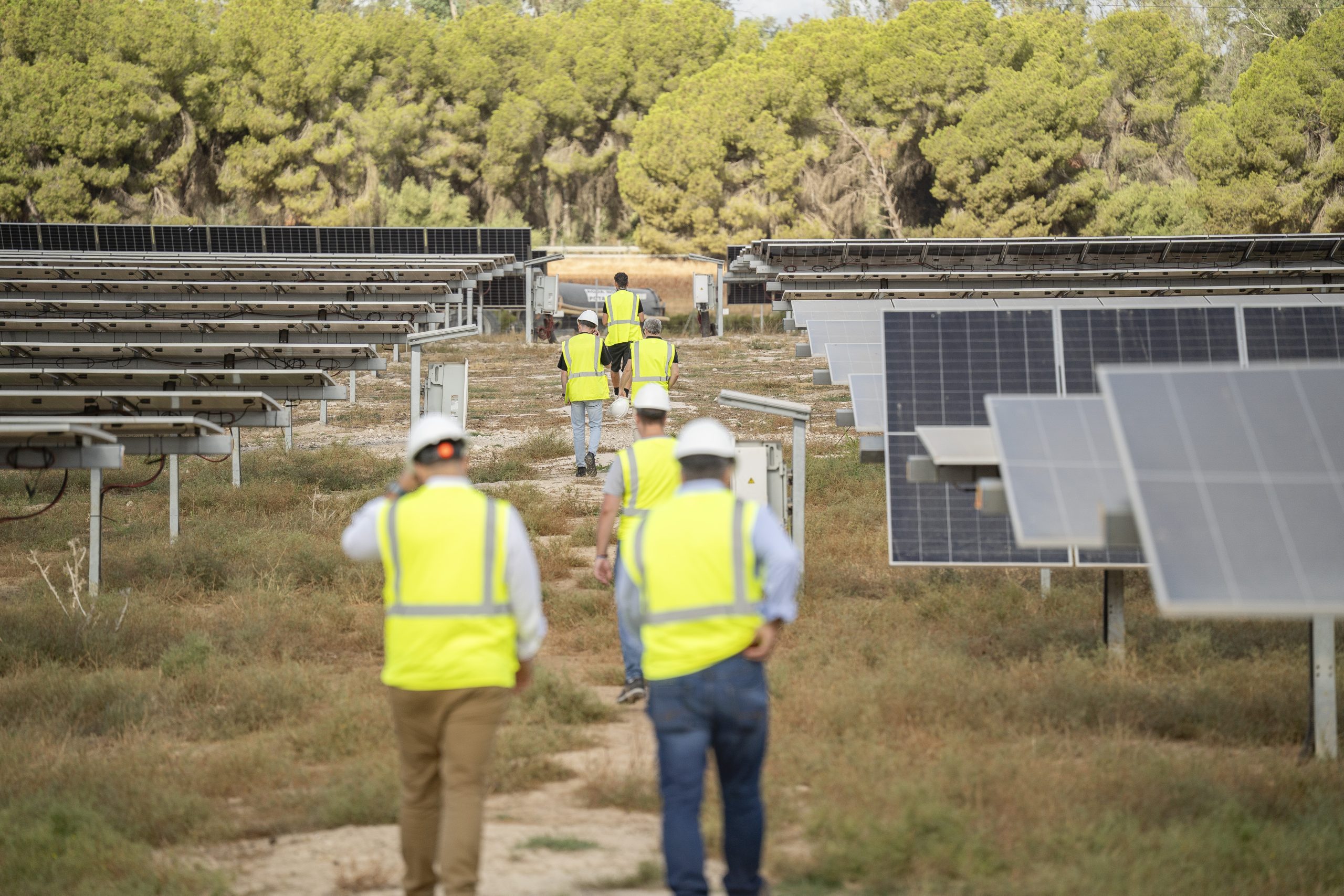
Installed capacity is only the starting point. In a photovoltaic plant, the final output depends on how the entire asset is operated and maintained: modules, inverters, trackers, cabling, substations, monitoring systems, weather conditions, land and maintenance.
Factors such as soiling, partial shading, vegetation, poor connections, material degradation or an inverter shutdown can reduce output if they are not detected in time. That is why digitalisation, inspections, data analysis and preventive maintenance are essential to optimise generation and extend the asset’s useful life.
In large-scale projects, every small deviation is multiplied across thousands of modules. That is why technical O&M expertise is crucial: it helps anticipate failures, reduce losses, improve availability and sustain asset performance throughout its operating life.
Solarig’s O&M expertise: from the panel to asset performance
Solarig has extensive experience in the operation and maintenance of photovoltaic solar plants, applying a technical approach focused on maximising the availability, safety and performance of renewable assets throughout their useful life.
In O&M, the difference lies in the detail: continuous monitoring, preventive and corrective maintenance, deviation analysis, thermography, vegetation management, technical cleaning, connection checks and a rapid response to incidents. All of this makes it possible to turn operational data into decisions that protect expected output.
Because a photovoltaic panel does not work alone: it is part of a complex renewable infrastructure that requires monitoring, technical expertise and continuous improvement to generate clean energy safely, efficiently and sustainably for decades.
Discover our O&M solutionsFrequently asked questions about photovoltaic panels
Do photovoltaic panels perform worse when it is very hot?
Direct sunlight and higher irradiance favour electricity generation, which is why summer is usually a period of high output. However, excessive temperature can reduce the module’s instantaneous power: as the cell heats up, voltage decreases, and this reduction generally outweighs the small increase in current.
What is the difference between irradiance and temperature?
Irradiance measures the solar energy reaching a surface. Temperature indicates the level of heat in the environment or in the module itself. There can be high irradiance and, at the same time, thermal losses if cell temperature is high.
What is a bifacial panel?
It is a module designed to generate electricity from both its front and rear sides. The additional energy depends on light reflected by the ground, mounting height, row spacing and the overall plant design.
What parts make up a photovoltaic panel?
In simplified terms, it usually includes tempered glass, encapsulants, solar cells, conductive ribbons, a backsheet or rear glass, an aluminium frame, a junction box, bypass diodes, cables and connectors. Bypass diodes are associated with groups of cells or substrings and help provide an alternative path for current when an area is affected by shading, mismatch or partial faults, helping to limit hot spots and losses. Their number and arrangement depend on the module design.
Why are operations and maintenance so important?
Because it makes it possible to detect losses, anticipate incidents, maintain equipment availability and optimise production. In a plant with thousands of modules, small deviations can have a significant impact if they are not properly managed.